Leading Hybrid Packaging End to End Services
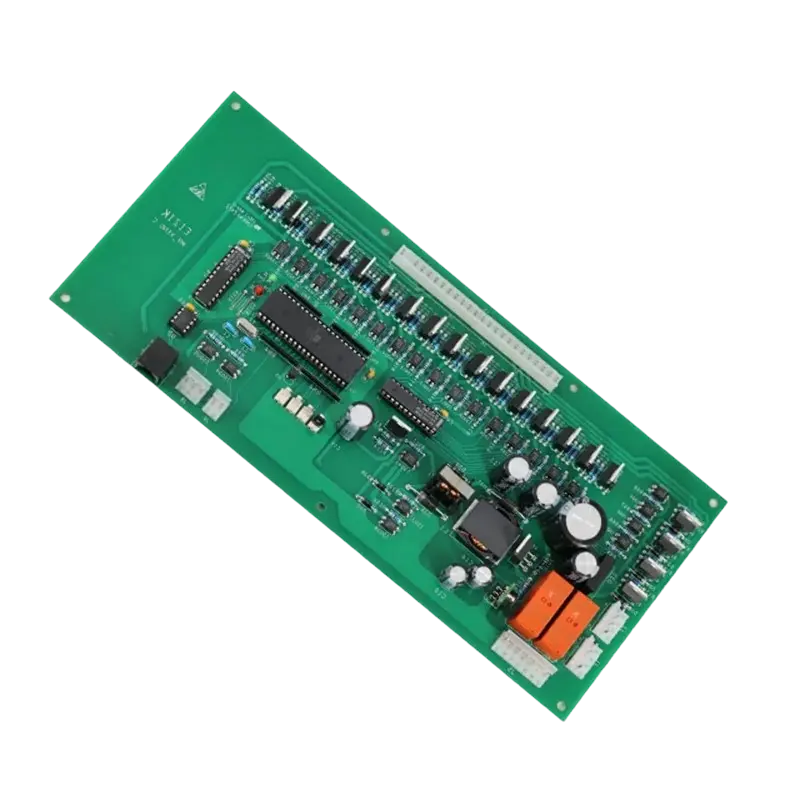
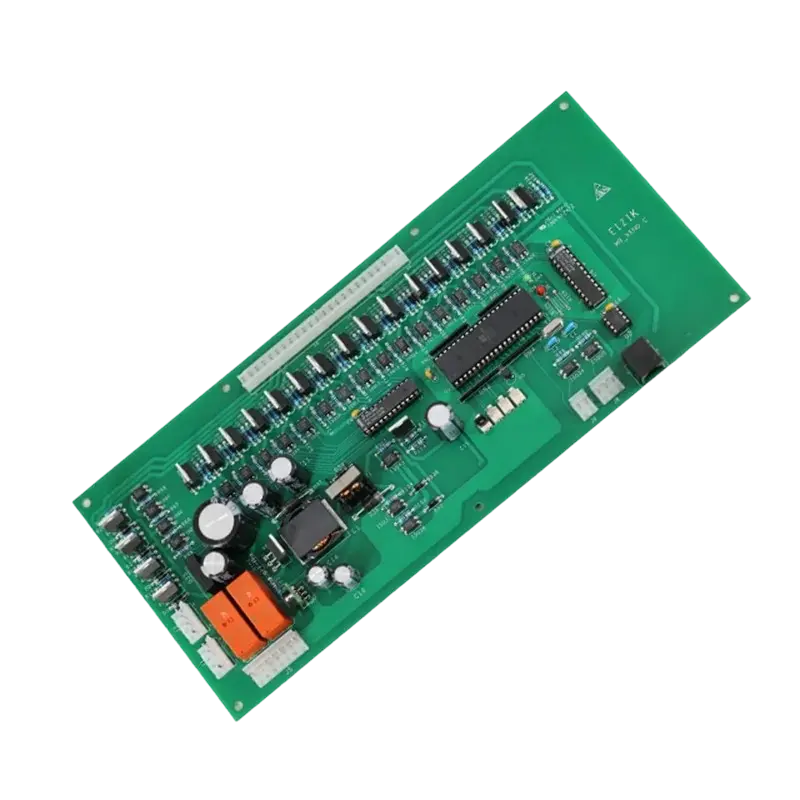
Leading Hybrid Packaging End to End Services integrate multiple packaging technologies, enabling precise assembly of complex modules, stable interconnect performance, and reliable operation for advanced electronic systems.
Advantages
Hybrid Packaging Core Advantage
Hybrid Packaging Core Advantage enables seamless integration of multiple technologies, delivering compact design, improved signal performance, and reliable interconnection for complex and high-density electronic modules.
Total In-house Integration
Total In-house Integration in Hybrid Packaging consolidates multiple assembly technologies into a controlled internal process flow, ensuring stable quality, improved efficiency, and reliable interconnection for complex electronic modules.
Full internal process control
Reduced outsourcing risks
Stable multi-technology integration
Faster production turnaround
Improved quality consistency
Advanced and Sufficient Inspection Equipment
Advanced and Sufficient Inspection Equipment in Hybrid Packaging ensures precise detection across multi-technology assemblies, enabling reliable quality control, stable interconnection verification, and consistent high-performance module output.
3D X-ray inspection systems
Automated optical inspection
Real-time process monitoring
Multi-layer defect detection
High-precision quality control
Supply Chain and Spare Parts
Supply Chain and Spare Parts in Hybrid Packaging ensure stable sourcing of critical components and reliable spare part availability, reducing production risks and supporting continuous delivery for complex multi-technology assemblies.
Global verified supplier network
Stable component sourcing flow
Fast spare parts replacement
Risk-controlled procurement system
Continuous production assurance
Capabilities
Hybrid Packaging Capabilities
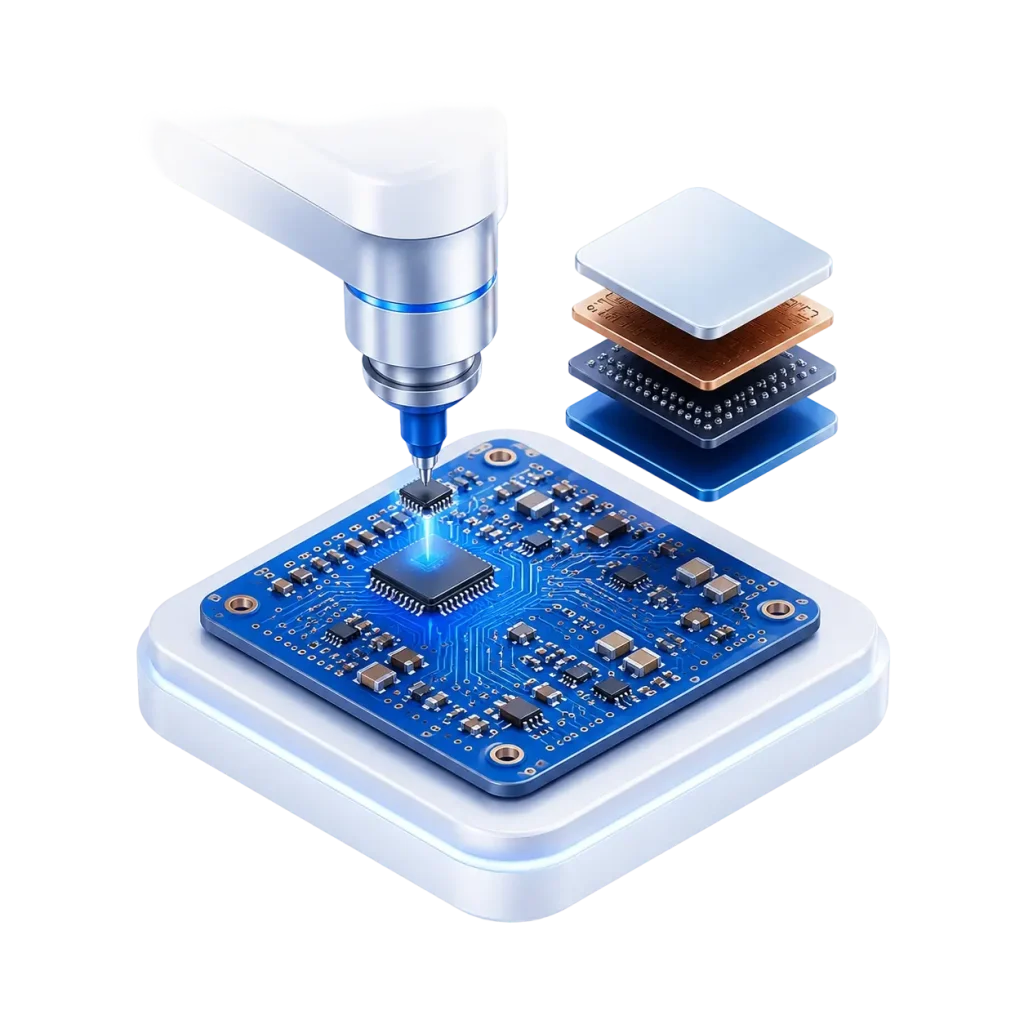
Hybrid Packaging Capabilities cover multi-technology integration, precision assembly, advanced interconnect design, and rigorous process control, ensuring compact structures and stable electrical performance for complex electronic modules.
Manufacturing Process
Key Factors in Hybrid Packaging
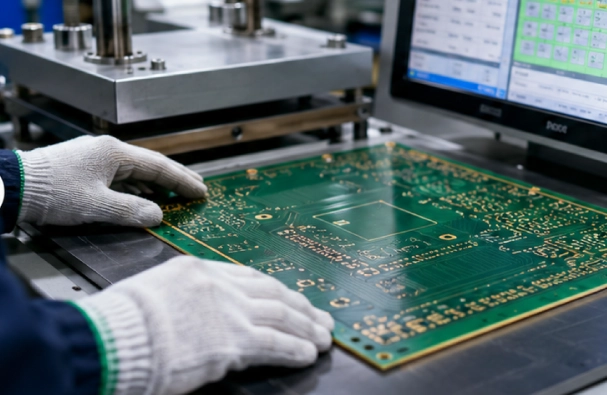
Successful hybrid packaging relies on precise die placement, advanced interconnection, effective thermal management, and strict process control to achieve reliable electrical performance and long-term product stability.
Process Integration Control
Key Factors in Hybrid Packaging include strict process integration control to coordinate multiple assembly technologies, ensuring stable interconnection, reduced defect risk, and consistent performance in complex electronic modules.
01
Thermal Management Design
Key Factors in Hybrid Packaging rely on effective thermal management design to control heat distribution across heterogeneous components, ensuring reliability, stability, and long-term performance in high-density assemblies.
02
Interconnect Reliability
Key Factors in Hybrid Packaging emphasize interconnect reliability through precise bonding and alignment, ensuring stable signal transmission and strong mechanical integrity in multi-technology packaging structures.
03
Material Compatibility
Key Factors in Hybrid Packaging require strong material compatibility across substrates and components, ensuring process stability, reduced stress, and consistent quality in advanced electronic assembly environments.
04
Manufacturing Capability
Production Capacity Table
Production Capacity Table for Hybrid Packaging provides clear visibility of multi-technology assembly capability, throughput, inspection coverage, and delivery capacity, enabling efficient planning for complex electronic module production.
Item
Capability
Assembly Type
SMT, THT, Mixed Technology
PCB Size
Min. 50 × 100 mm,Max. 510 × 480 mm
Board Type
Rigid, Flex, Rigid-Flex, Aluminum PCB, Ceramic PCB
Assembly Standard
IPC-A-610 Class 2 / Class 3
Lead-Free Process
Available
RoHS & REACH Compliance
Yes
ESD Protection
ANSI/ESD S20.20
Minimum Chip Size
01005 (0.4 × 0.2 mm)
Fine Pitch IC
0.30 mm
Minimum BGA Pitch
0.30 mm
Maximum BGA Size
80 × 80 mm
BGA Ball Count
Up to 3000 Balls
Maximum Component Height
40 mm
Maximum Component Weight
100 g
The table above only lists process parameters for HDI PCB products. Please download the full process manual.
Quality Control
Hybrid Packaging Quality Control
Hybrid Packaging Quality Control ensures strict monitoring across multi-technology assembly processes, including inspection, verification, and testing, delivering stable interconnection reliability and consistent high-performance module quality.
Core Quality Control Methods
Core Quality Control Methods in Hybrid Packaging include SPI monitoring, AOI inspection, X-ray analysis, and functional testing, ensuring accurate multi-technology integration, stable interconnects, and reliable module performance.
SPI Process Monitoring
Core Quality Control Methods in Hybrid Packaging begin with SPI process monitoring to control solder paste volume and printing accuracy, ensuring stable assembly foundation and reliable multi-technology interconnection quality.
AOI Defect Inspection
Core Quality Control Methods in Hybrid Packaging include AOI defect inspection to detect placement errors, polarity issues, and visible defects, ensuring consistent assembly accuracy across complex hybrid module structures.
X-ray Internal Analysis
Core Quality Control Methods in Hybrid Packaging rely on X-ray internal analysis to identify hidden solder defects and interconnect issues, ensuring reliable bonding quality and stable electrical performance in dense assemblies.
Functional Circuit Testing
Core Quality Control Methods in Hybrid Packaging finalize with functional circuit testing to verify electrical performance and system stability, ensuring each module meets strict reliability and operational standards.
Certifications
Certifications in Hybrid Packaging confirm adherence to ISO quality systems, IPC-A-610 standards, and RoHS requirements, ensuring strict process control, full traceability, and reliable high-performance multi-technology electronic assembly output.
IS0 9001:2015
stepping stone
The most fundamental and universally applicable quality management systemcertification.
IPC A 610
Industry Standard
The most authoritative international standard for the acceptance of electronic assembly and PCB manufacturing.
IATF 16949:2016
Automotive-grade (high gold content)
Demonstrate the capability to manufacture highly reliable automotive PCB.
ISO 13485
Medical-grade (high gold content)
Demonstrate the capability to manufacture high-precision PCB for medical equipment.
ISO14001:2015
Environmental system
Green factory certification is highly valued by major manufacturers and overseas clients.
UL
Safety Certification
Mandatory safety and flame-retardant standards for entering the North American market.
RoHS
Environmental regulations
Restriction of Hazardous Substances (RoHS) Directive (a standard requirement for electronic products exported to the EU).
REACH
Environmental regulations
EU Regulation on the Registration, Evaluation, Authorisation and Restriction of Chemicals.
IS0 9001:2015
01
IPC A 610
02
IATF 16949:2016
03
ISO 13485
04
ISO14001:2015
05
UL
06
RoHS
07
REACH
08
Applications
Hybrid Packaging Application
Hybrid Packaging Application includes aerospace, automotive, industrial control, communication, and medical systems, ensuring compact integration, stable performance, and high-reliability operation for advanced electronic modules.
01
Aerospace Systems
02
Automotive Electronics
03
Communication Systems
04
Medical Electronics
05
Industrial Control
01
Aerospace Systems
Hybrid Packaging Application in aerospace systems enables compact multi-technology integration for avionics and control modules, ensuring high reliability, thermal stability, and precise interconnection performance in extreme environments.
02
Automotive Electronics
Hybrid Packaging Application in automotive electronics supports integration of sensors, power modules, and control units, ensuring vibration resistance, thermal endurance, and stable long-term performance in complex vehicle systems.
03
Communication Systems
Hybrid Packaging Application in communication systems enables high-density integration for networking and transmission devices, ensuring low-loss interconnections, signal integrity, and stable high-speed data performance.
04
Medical Electronics
Hybrid Packaging Application in medical electronics provides high-reliability integration for diagnostic and monitoring devices, ensuring precision performance, safety compliance, and stable operation in critical healthcare applications.
05
Industrial Control
Hybrid Packaging Application in industrial control delivers robust multi-layer integration for automation and control equipment, ensuring stable signal transmission, high durability, and reliable operation in continuous industrial environments.
FAQ
BGA Assembly FAQ
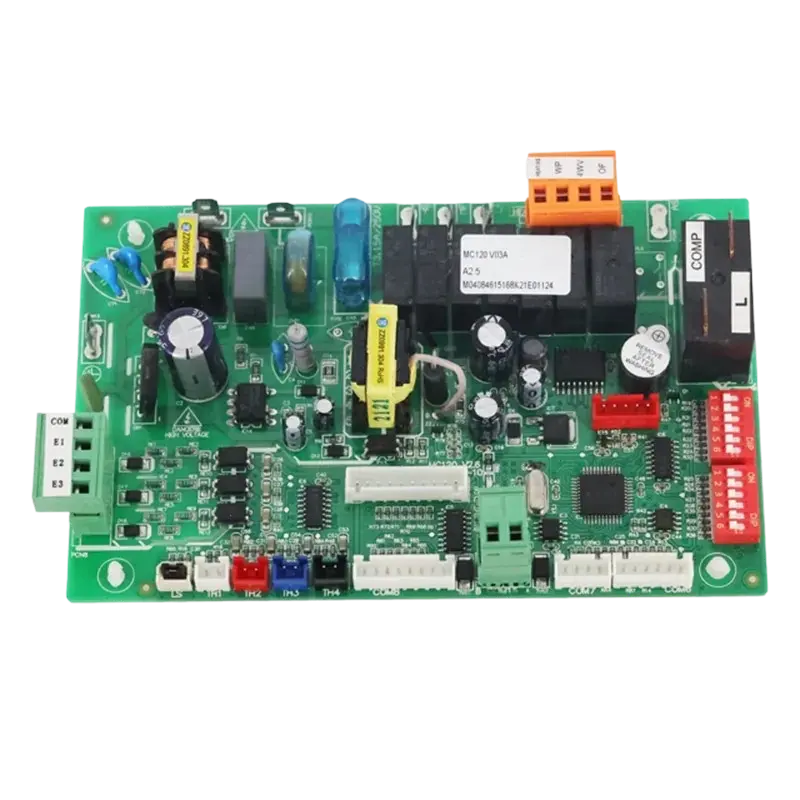
BGA Assembly FAQ covers lead time, rework capability, X-ray inspection standards, component sourcing, and production requirements, helping customers understand process flow, quality control methods, and feasibility for high-density PCB assembly projects.
Q1
What is the typical lead time for BGA Assembly?
Lead time depends on PCB complexity, BGA pitch, and component availability, with prototype builds typically completed in a few days and production scheduled efficiently for stable delivery.
Q2
Can BGA components be reworked or repaired?
Yes, BGA rework is supported using specialized reballing and reflow equipment, with X-ray inspection ensuring accurate diagnosis and reliable repair outcomes.
Q3
What inspection methods are used for BGA Assembly?
We use SPI, AOI, X-ray inspection, and electrical testing to ensure precise solder joints, detect hidden defects, and maintain high reliability in dense PCB structures.
Q4
Do you support small batch BGA Assembly production?
Yes, we support prototype and low-volume production with flexible MOQ, making it suitable for R&D validation and early-stage product development.
Solutions
BGA Assembly Solutions
BGA Assembly Solutions provide end-to-end PCB manufacturing including component sourcing, precision ball placement, controlled reflow soldering, X-ray inspection, and testing, ensuring high reliability and stable performance.
Contact Our Team
LT CIRCUIT Knowledge Base delivers practical PCB and PCBA knowledge, covering fabrication processes, assembly techniques, materials, and quality control for better engineering decisions.
*We respect your confidentiality and all information is protected.